


Lake Norman Region, North Carolina Pro Review: Cornelius, Davidson, Huntersville, Mooresville, Troutman, Sherrills Ford, and Denver

Lake Norman review: North Carolina’s Inland Sea—Growth and Identity overview, and Future Horizons for Cornelius, Davidson, Huntersville, Mooresville, Troutman, Sherrills Ford, and Denver
Nestled in the Piedmont’s red clay hills, where the Catawba River weaves through oak-hickory forests, Lake Norman stands as North Carolina’s largest man-made lake—a testament to human ambition and natural splendor. Created in 1963 by Duke Energy’s Cowans Ford Dam, this 34-mile-long reservoir, with 520 miles of serpentine shoreline and 3.4 trillion gallons across 32,510 acres, was born to power the Carolinas’ industrial ascent. Yet, it has evolved into a vibrant nexus of recreation, economic vitality, and cultural convergence. Spanning Mecklenburg, Iredell, Catawba, and Lincoln counties, Lake Norman binds a constellation of communities—Cornelius, Davidson, Huntersville, Mooresville, and quieter enclaves like Troutman, Sherrills Ford, and Denver—into a region that pulses with distinct identities yet shares the lake’s magnetic pull.

In 2025, six decades after its creation, Lake Norman is North Carolina’s “Inland Sea,” a mirror reflecting the state’s ambition, where Charlotte’s urban pulse meets rural heritage, and where affluent newcomers and multigenerational families navigate growth’s promise and peril.
This editorial weaves a comprehensive narrative of Lake Norman’s multifaceted identity, exploring its demographic surge, economic dynamism, social currents, recreational riches, academic anchors, and future trajectory over the next 10–20 years. From Cornelius’s yacht-dotted bays to Troutman’s pastoral trails, we delve into each town’s character, assess the region’s role as a recreational and economic satellite to Charlotte, and confront its environmental challenges. As North Carolina strides into a new era of Sun Belt prominence, Lake Norman’s story is one of resilience and reinvention—a region balancing paradise with progress, where the lake’s glassy expanse whispers both opportunity and caution.
The Heartbeat of the Shoreline: Cities and Towns Embracing the Waters of Lake Norman
Lake Norman’s 520-mile shoreline weaves through four counties, cradling a mosaic of municipalities that define the region’s character. Below, we explore the distinct identities of the primary towns with direct lake access—Cornelius, Davidson, Huntersville, and Mooresville—alongside nearby communities like Troutman, Sherrills Ford, and Denver.
Cornelius: The Polished Gem
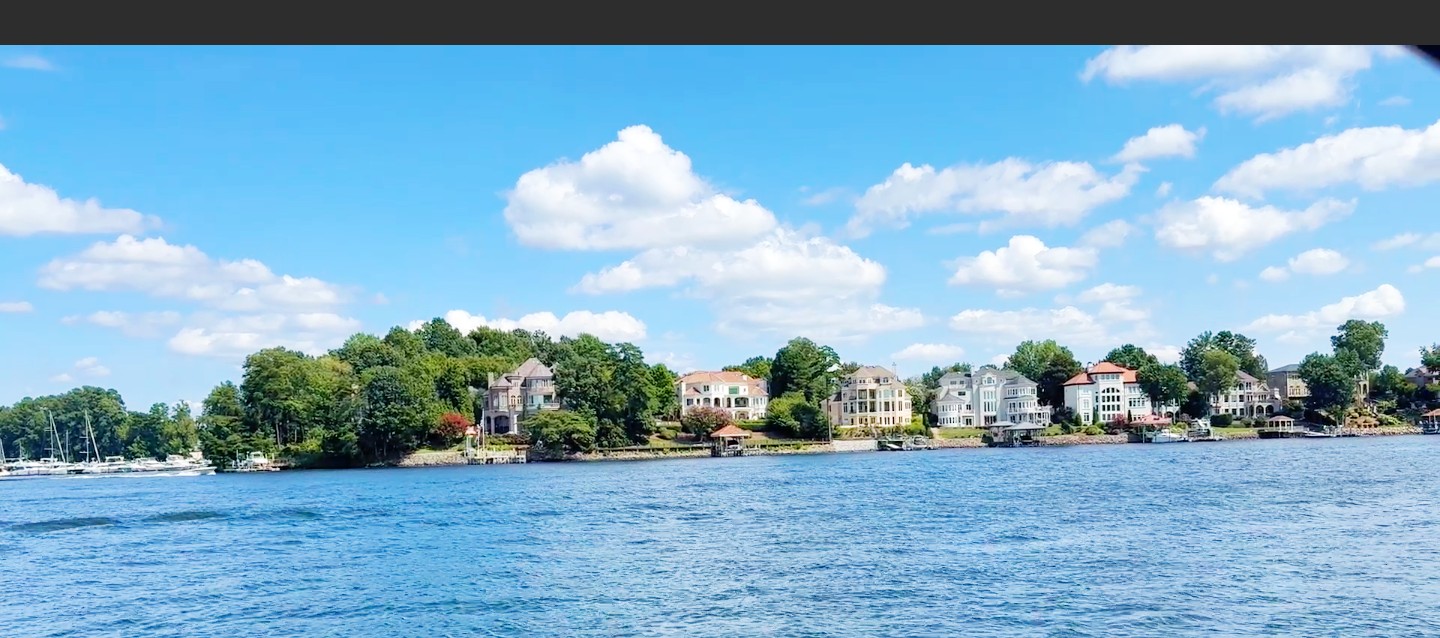
- Overview & History: Incorporated in 1905 as a cotton and mill town in Mecklenburg County, Cornelius transformed with Lake Norman’s creation, becoming a sought-after lakeside suburb with 13 miles of shoreline.
- Demographics & Growth:
- Population: ~32,000, with 26.3% growth since 2010.
- Median household income: $106,000; median home value: $340,000.
- Demographic: 79% White, 8.5% African-American, 8.4% Hispanic; 88.6% white-collar workforce.
- Economy:
- Driven by luxury real estate (estates fetch $1,000-$2,500 per linear foot), retail, and lake-related businesses (marinas, boat rentals).
- Key hubs: The Peninsula and Jetton Cove neighborhoods.
- Lifestyle & Recreation:
- Ramsey Creek Park: Offers a beach, boat ramps, fishing piers, and trails.
- Social district: Old Town’s D9 Brewing, Hello, Sailor, and farmers’ markets foster community vibrancy.
- Cultural events: Community Arts Project, art festivals.
- Challenges:
- Traffic congestion on Catawba Avenue (25-minute rush-hour delays).
- Affordability concerns as high costs exclude lower-income families.
- Character: Known as “Charlotte’s Hamptons,” Cornelius blends polished affluence with approachable community spirit, though inclusivity remains a challenge.
Davidson: The Scholarly Sanctuary
- Overview & History: Founded in 1837 alongside Davidson College, named for Revolutionary War hero William Lee Davidson, this historic college town retains a small-town charm across 6.2 square miles.
- Demographics & Growth:
- Population: ~15,297.
- Median household income: $124,853; per capita income: $55,122.
- Demographic: 88% White, with growing diversity via equity task force; 92% white-collar workforce.
- Economy:
- Anchored by Davidson College, boutique retail, and local restaurants (e.g., Kindred’s farm-to-table).
- Strong office and retail occupancy, with new projects adding commercial space.
- Lifestyle & Recreation:
- Limited lakefront access, but greenways, parks, and the college’s “Lake Campus” offer sailing and kayaking.
- Main Street: Walkable hub with bookstores, cafes, and the Cain Center for the Arts.
- Events: Concerts on the green, farmers’ markets, art festivals.
- Challenges:
- Parking shortages during college events.
- Balancing controlled growth with housing demand.
- Character: “Small town, big mind,” Davidson merges intellectual vibrancy with lakeside leisure, prioritizing sustainability and civic engagement.
Huntersville: The Bustling Hub
- Overview & History: Once a farming hamlet in Mecklenburg County, Huntersville has grown nearly 2,000% since 1990 into a dynamic suburban hub with 31 miles of shoreline.
- Demographics & Growth:
- Population: ~62,000, with 31% growth since 2010.
- Median household income: $102,016; median home value: $280,000.
- Demographic: 75.3% White, 12.4% Black, 6.7% Hispanic; 90% white-collar workforce.
- Economy:
- Diverse: Corporate campuses (Lowe’s headquarters), retail (Birkdale Village), light industry.
- Mixed-use developments drive commercial growth.
- Lifestyle & Recreation:
- Blythe Landing Park: Boat ramps, picnic shelters, volleyball courts.
- Latta Nature Preserve: 1,400 acres for hiking, equestrian trails.
- Cultural draws: Discovery Place Kids, Carolina Renaissance Festival.
- Challenges:
- I-77 congestion (40,000 daily vehicles).
- Sprawl threatens green spaces, sparking preservation debates.
- Character: Huntersville bridges urban convenience and family-centric lakeside living, thriving as a vibrant, fast-growing hub.
Mooresville: Race City’s Revving Core
- Overview & History: Located in Iredell County, Mooresville, known as “Race City USA,” blends NASCAR heritage with lakeside allure across 24 miles of shoreline.
- Demographics & Growth:
- Population: ~52,000, with 53% growth since 2010.
- Median household income: $90,000; median home value: $250,000.
- Demographic: 69.8% White, 10.9% Black, 8.8% Hispanic.
- Economy:
- Motorsports hub: 60+ NASCAR teams, employing 2,000.
- Corporate anchor: Lowe’s headquarters.
- Tourism: NC Auto Racing Hall of Fame, historic downtown’s breweries.
- Lifestyle & Recreation:
- Lake access: Marinas, Queen’s Landing dinner cruises, fishing.
- Cultural draws: Race shops, Lazy 5 Ranch’s exotic animal drives.
- Events: Race City Festival, craft brewery scene.
- Challenges:
- Downtown parking shortages (300 spaces for 10,000 weekly visitors).
- Calls for inclusivity via Diversity Council initiatives.
- Character: Mooresville fuses industrial grit, racing legacy, and upscale lake living, attracting a diverse community.

Nearby Enclaves: Troutman, Sherrills Ford, Denver
- Troutman:
- Overview: A small Iredell County town with 3,698 residents and 55% growth since 2010.
- Economy & Lifestyle: Median income $85,000; homes $260,000. Lake Norman State Park’s 30 miles of trails and Davesté Vineyards draw visitors.
- Character: Rural charm with growing subdivisions; residents value tranquility but fear sprawl.
- Sherrills Ford:
- Overview: Unincorporated Catawba County community (~1,000 residents) with rustic docks.
- Economy & Lifestyle: Median income $80,000; emerging residential development. Lineberger’s Cattle Company reflects pioneer roots.
- Character: Quiet lakefront living, increasingly attractive for development.
- Denver:
- Overview: Lincoln County town with 2,697 residents, 16.8% growth since 2010.
- Economy & Lifestyle: Homes $270,000; Beatty’s Ford Park offers kayaking. Golf communities appeal to retirees.
- Character: Scenic, slow-paced, with limited amenities but growing appeal.
- Collective Role: These enclaves preserve Lake Norman’s pastoral roots, balancing growth with tranquility.
Lake Norman Demographic Surge: A Region Transformed
- Population Growth:
- Over 170,000 residents across core towns and adjacent communities, an 831% increase since 1990.
- Driven by Charlotte’s economic pull (20-30 miles south via I-77), remote work, and waterfront allure.
- Economic Profile:
- Median household incomes: $90,000 (Mooresville) to $124,853 (Davidson).
- Home values: $250,000-$340,000, with lakefront estates at $1,000-$2,500 per linear foot.
- Demographic Composition:
- 87-97% White, 19% under 18, 32% over 65, blending families and retirees.
- Growing diversity: 3-10% Black, Hispanic, Asian residents.
- Challenges:
- Gentrification inflates costs, displacing longtime residents.
- Poverty persists at 5-7% in overlooked pockets.
- Infrastructure strains: NC-150 traffic, school overcrowding, water quality issues (algal blooms).
Economic Engine and Tourism Magnet of Lake Norman region
- Economic Contributions:
- Hydroelectric legacy powers 20% of North Carolina’s grid, cools McGuire Nuclear, quenches Charlotte.
- Fuels $36.7 billion statewide tourism industry (2024), supporting 178,700 jobs.
- Local Impact:
- Visit Lake Norman’s festivals, regattas, eco-tours generated $23 million in 2012, tripled by 2025.
- Mooresville’s motorsports employ 2,000; Huntersville’s corporate campuses (Lowe’s) drive logistics.
- Cornelius’s lakefront estates make it the Southeast’s priciest lake market.
- Business Climate:
- 2.5% corporate tax rate lures firms like Ingersoll Rand.
- Retail hubs (Birkdale Village), marinas, and hospitality thrive.
- Challenges:
- Seasonal traffic snarls (40,000 daily I-77 vehicles).
- Rising rents ($1,800-$2,200 monthly) strain affordability.
- Future Outlook: Sustainable planning needed to balance growth with infrastructure capacity.
Social Fabric of the Lake Norman area: A Tapestry of Tensions and Ties
- Community Cohesion:
- Events like Cornelius’s wine walks, Davidson’s farmers’ markets, and Mooresville’s Race City Festival foster unity.
- Lake Norman Diversity Council (founded 2008) promotes inclusion for 3-10% minority population.
- Faith communities and nonprofits (e.g., National Charity League) drive volunteerism.
- Diverse Perspectives:
- Retirees: Drawn by low taxes (1.07-1.17% per $100 valuation), 55+ enclaves like Trilogy Lake Norman.
- Young professionals: Value top-tier schools (Lake Norman Charter), connectivity.
- Longtimers: Mourn rural simplicity in Troutman, Sherrills Ford; cite sprawl concerns.
- Challenges:
- Environmental advocacy rises against 2023 water quality alerts (algal blooms).
- Affluent influx tests inclusivity; diversity dialogues address isolation.
- Strengths: Shared rituals—July 4th boat parades, clean-up drives—bind communities.
Destinations and Delights: A Recreational Renaissance at the Lake Norman
- On the Water:
- Boating: 10,000 registered vessels; 5,000 annual pontoon rentals (Carolina Boat Rentals).
- Fishing: 1.2 million striped bass stocked annually.
- Paddleboarding, kayaking: Popular at Lake Norman State Park’s 1,328 acres.
- Ashore:
- Lake Norman State Park: 30 miles of trails for hiking, biking.
- Historic Latta Plantation: Revives 1800s farm life with 16 miles of paths.
- Carolina Raptor Center: Rehabilitates 900 birds yearly.
- Playing beach volleyball is a popular activity
- Town Highlights:
- Mooresville: NC Auto Racing Hall of Fame, Lazy 5 Ranch’s giraffe feedings.
- Huntersville: Birkdale Village’s shopping, jazz; Discovery Place Kids.
- Davidson: Circles Social District’s craft brews, Cain Center’s indie theater.
- Cornelius: Ramsey Creek Park’s beach, Port City Club dining.
- Cultural Events:
- Vineyards (Davesté, Shelton) offer tastings with cove views.
- Dragon boat races, Christmas boat parades light up the calendar.
- Sustainability: Clean-up drives, water monitoring preserve lake allure.

Academic Anchors: Cultivating Minds and Futures
- Davidson College:
- Founded 1837, enrolls 1,973 students across 665 acres.
- Ranked 15th nationally for liberal arts; 71% study-abroad rate, Division I Wildcats.
- “Lake Campus” hosts sailing; philanthropy drives local engagement.
- UNC Charlotte:
- 15 miles south, enrolls 30,298 students.
- Powers research in engineering, business, fueling Huntersville’s corporate hubs.
- Mitchell Community College:
- In Mooresville, serves 3,200 with trades programs (motorsports, nursing).
- Impact: Awards 13,025 degrees annually, cementing Lake Norman as a pipeline to North Carolina’s innovation economy.
Forecast for Lake Norman: Growth Over the Next 10–20 Years
- Population:
- Projected to rise from ~350,000 (2025) to 430,000 by 2035.
- Huntersville, Cornelius, Mooresville to see 10-15% annual growth, driven by Charlotte’s expansion, schools, lake allure.
- Real Estate:
- Luxury estates ($7.5-$12 million) to proliferate in Cornelius, Mooresville.
- Mid-range suburban homes to expand for families, professionals.
- Mixed-use projects in Huntersville, Mooresville’s downtown to boost retail, offices.
- Infrastructure: Road expansions, greenways to support growth.
- Challenge: Rising costs may exacerbate affordability issues.
- Environmental Risks:
- Algal Blooms: Over 80 reported since June 2025, driven by runoff, warm temperatures; threaten water quality, aquatic life.
- Erosion: Construction (e.g., Molly’s Backbone) risks sediment accumulation.
- Flooding: Shoreline development increases flood risks, requiring better planning.
- Sustainability: Stricter runoff controls, habitat preservation critical to protect Carolina heelsplitter mussel, lake health.
- Opportunities:
- Tourism expansion: Eco-tours, heritage events to boost economy.
- Corporate relocation: Satellite offices to grow in Mooresville, Huntersville.
- Sustainable development: Potential to model environmentally sensitive growth.
North Carolina’s Mirror: Lake Norman’s Statewide Significance
- Economic Role of the Lake Norman area:
- Powers 20% of state’s grid, cools McGuire Nuclear, quenches Charlotte.
- Drives $36.7 billion tourism industry, 178,700 jobs (2024).
- Bolsters Mecklenburg, Iredell as top-10 growth counties.
- Lake Norman Social Dynamics:
- Tests inclusivity with 90% White demographic; diversity initiatives counter homogeneity.
- Blends rural heritage with urban ambition, reflecting North Carolina’s evolution.
- Lake Norman
- Algal blooms, habitat loss mirror statewide sustainability issues.
- Preservation of lake ecosystem critical for regional identity.
- Regional Integration of Lake Norman:
- 15-30 miles from Charlotte, serves as recreational, economic satellite.
- Independent hub with motorsports, corporate, and tourism economies.
- Future Vision: Strategic planning will determine if Lake Norman remains a vibrant Inland Sea or a cautionary tale of overreach, reflecting North Carolina’s resolve to balance heritage with progress.
Conclusion about Lake Norman: A Region at a Crossroads
Lake Norman, in 2025, is North Carolina’s microcosm—a dynamic blend of growth, identity, and aspiration. Its 170,000 residents, from fishermen to financiers, navigate progress’s tides across 520 miles of shoreline. Cornelius’s polish, Davidson’s erudition, Huntersville’s bustle, Mooresville’s grit, and the quiet charm of Troutman, Sherrills Ford, and Denver weave a tapestry of resilience. Over the next 10–20 years, population surges, real estate booms, and environmental challenges will test this Inland Sea’s stewards. Yet, through shared rituals—sunset cruises, community festivals, clean-up drives—Lake Norman binds its people to a common dream. As North Carolina strides toward a Sun Belt future, Lake Norman reflects its soul: vibrant, vexed, and verdant, daring to balance paradise with progress.
Related News